



How-to
How United States Businesses Can Manage Independent Contractor Non-Disclosure Agreements (NDAs) Efficiently
Managing independent contractor Non-Disclosure Agreements (NDAs) is critical for protecting sensitive information in United States businesses. Proper.
By The surhires.com team · · 6 min read
Managing independent contractor Non-Disclosure Agreements (NDAs) is critical for protecting sensitive information in United States businesses. Proper management reduces legal risks, ensures compliance, and streamlines contractor onboarding. Leveraging AI and technology tools helps businesses efficiently handle NDAs and safeguard confidential data.
Key takeaways
- Independent contractor NDAs protect trade secrets and proprietary business data.
- Standardized templates and clear terms improve NDA enforceability.
- Technology and AI help United States businesses reduce errors and track compliance.
- Knowing state-specific legal requirements avoids unenforceable agreements.
- Automated reminders ensure timely NDA renewals and reviews.
- Effective NDA management enhances contractor trust and professionalism.
What Is an Independent Contractor NDA and Why Is It Important?
An independent contractor NDA is a legal contract that protects a business’s confidential information by restricting the contractor’s use and disclosure of that data. It is important because it safeguards trade secrets, client lists, and proprietary processes critical to competitive advantage.
Strong NDAs help companies in cities like Houston or Detroit prevent costly leaks or misuse of sensitive materials. They also set clear expectations for contractors, aligning with compliance norms and protecting intellectual property. Without NDAs, businesses risk exposing critical information that can harm their operations or reputation.
How Can United States Businesses Manage Independent Contractor NDAs Efficiently?
Efficient NDA management combines processes and technology to reduce risks and save time. Businesses should:
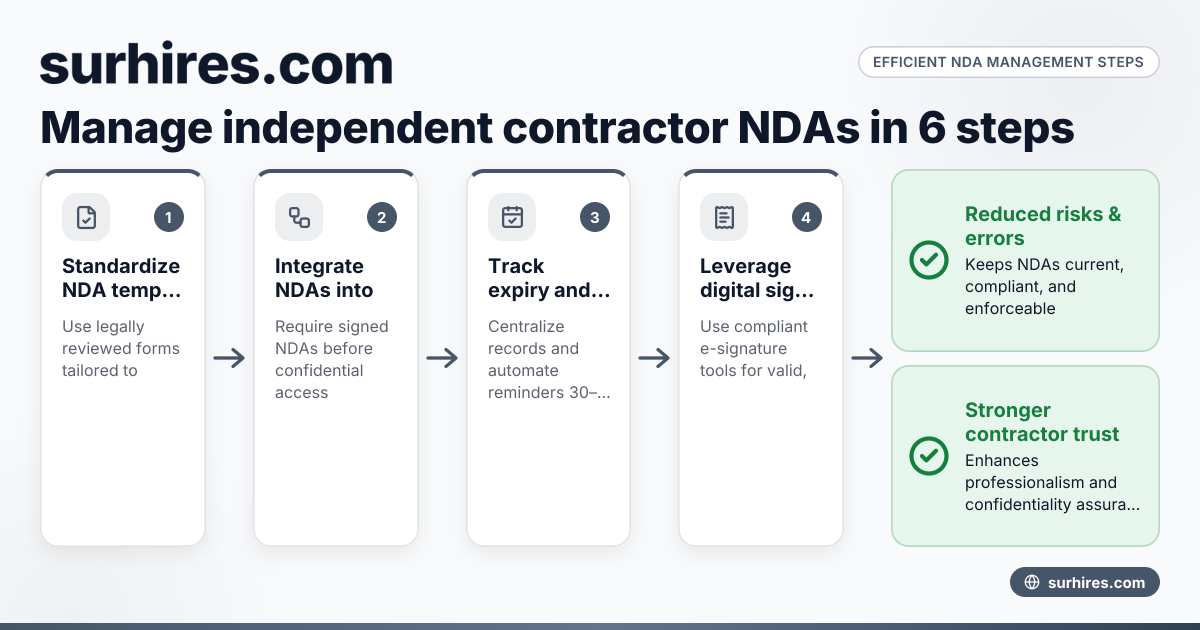
- Standardize NDA Templates
Use legally reviewed templates tailored for independent contractors and local laws—California’s restrictions on non-competes are an example. Clear language avoids ambiguity that could invalidate the agreement.
- Integrate NDAs into Onboarding
Require signed NDAs before access to confidential information or systems. Combine this step with background checks and IRS form collection for a seamless onboarding workflow.
- Track Expiry and Renewals
Maintain a centralized record of NDA dates and automate reminders 30 to 60 days before expiry. This prevents coverage gaps and enforces continuous confidentiality.
- Leverage Digital Signing Platforms
Use e-signature tools compliant with ESIGN and UETA laws, like DocuSign, to streamline signing and maintain valid, timestamped records.
- Secure Storage with Access Controls
Protect NDAs using encrypted cloud storage compliant with SOC 2 standards. Apply role-based permissions and maintain backups.
- Schedule Periodic Reviews
Update NDAs annually to align with evolving federal and state laws, changes in contractor roles, or new business risks.
Following these steps reduces administrative errors and legal exposure while keeping NDAs current and enforceable.
How Does AI Manage Independent Contractor NDAs?
AI manage independent contractor NDA compliance by automating document tracking, compliance checks, and alerts. This boosts accuracy and efficiency in NDA handling.
AI-powered systems scan NDA documents, extract critical dates, and send timely renewal reminders, preventing lapses in confidentiality protection. They also analyze agreements for missing or noncompliant clauses, ensuring consistency with legal standards. Real-time dashboards provide managers with a comprehensive view of NDA statuses, allowing prompt action on risks or expirations.
For example, a Chicago-based software firm uses AI to track NDA renewals and detect outdated terms due to changing Illinois confidentiality laws. Automating these tasks frees legal teams to focus on strategic risk management instead of manual tracking.
What Are the Key Legal Considerations for NDAs in the United States?
Effective NDAs must deal with several legal factors:
- Scope of Confidential Information: Clearly define what is protected; exclude public or independently known information.
- Duration: Typically 1-3 years, but trade secrets may require indefinite protection under the Defend Trade Secrets Act.
- Restricted Activities: Avoid including unenforceable non-compete clauses, especially in states like California.
- State-Specific Variations: Laws differ by state, affecting enforceability and required clauses.
- Federal Compliance: NDAs cannot bar whistleblowing or legal reporting; they must align with labor and antitrust laws.
Consulting U.S.-based legal counsel helps draft enforceable NDAs tailored to state and federal rules.
How Should Businesses Store and Secure Contractor NDAs?
Businesses must protect NDAs to prevent unauthorized access and ensure audit readiness.
- Use encrypted cloud storage platforms with SOC 2 compliance to secure documents.
- Integrate NDA files with contractor management systems for unified records.
- Implement role-based access controls and maintain detailed audit logs.
- Schedule regular backups and test recovery plans.
- Follow relevant data privacy laws, such as compliance with CCPA for any personal contractor data.
Proper security reduces risks of data breaches while maintaining contractor confidence.
Can NDAs Be Modified or Terminated Once Signed?
Yes. NDAs can be amended if both parties agree. Amendments should be documented in writing and signed electronically or physically. Termination usually requires written notice per contract terms, but confidentiality obligations for trade secrets often survive termination. Keeping clear records of modifications and terminations avoids disputes.
For instance, a Chicago marketing agency updated its contractor NDA when expanding access to customer data, ensuring confidentiality terms matched the new scope.
What Is the Role of NDAs in the Overall Contractor Compliance Strategy?
NDAs are a foundational element of contractor compliance but should be coordinated with:
- Background checks (see examples from Delaware businesses)
- Multi-state workers’ compensation compliance (learn more)
- IRS Form 1099-NEC filing (read how to manage deadlines)
- Cybersecurity and data privacy policies (explore contractor compliance)
- Non-compete and non-solicitation agreements (discover tips)
This holistic approach reduces legal and operational risks and strengthens contractor oversight.
How Can Businesses Streamline NDA Management with surhires.com?
surhires.com provides a tailored platform for United States businesses to efficiently manage independent contractor NDAs. It offers:
- Secure, encrypted document storage meeting SOC 2 expectations
- Automated reminders for NDA renewals and reviews to prevent lapses
- Centralized contractor profiles linking NDA compliance with other onboarding and tax tasks
- Integration with compliance workflows to simplify audits and risk controls
Using surhires.com reduces manual effort, ensures adherence to U.S. legal standards, and supports professional contractor relationships. To explore practical contractor compliance tools, see the surhires.com blog.
Frequently asked questions
What should an independent contractor NDA include?
An effective NDA defines confidential information clearly, excludes public or pre-existing information, limits disclosure, sets duration, and details remedies for breaches. It must be concise, legally compliant, and specific to the contractor’s role and state laws.
How long are NDAs typically valid?
NDAs generally last one to three years, depending on business needs and state regulations. Trade secrets may have indefinite protection under federal law like the Defend Trade Secrets Act.
Can an independent contractor refuse to sign an NDA?
Yes, a contractor can decline to sign. This may halt engagement unless terms are negotiated. Open communication may resolve concerns and lead to mutual agreement.
Are electronic signatures valid for NDAs?
Yes, electronic signatures are legally valid under U.S. laws including the ESIGN Act and UETA when both parties agree. Using trusted platforms ensures compliance and security.
How can AI improve NDA compliance management?
AI automates tracking of contract deadlines, audits contract language for compliance gaps, and sends proactive alerts. This reduces mistakes, saves time, and helps detect risks early.
What happens if a contractor violates an NDA?
Violations allow businesses to seek legal remedies such as damages or injunctions. Prompt action protects confidential information and deters future breaches.
Managing independent contractor NDAs effectively is vital for U.S. businesses to safeguard sensitive data and reduce risks. Using advanced solutions like surhires.com helps streamline this essential process. For more insights, visit the surhires.com blog.
Published 22 October 2026
See Surhires on a live requisitionMore from the blog
How to Manage State-Specific Sales Tax Obligations When Paying Independent Contractors in the United States
Managing state sales tax obligations for independent contractors in the United States requires understanding varied state rules, identifying taxable.
27 October 2026 · 6 min read
How United States Businesses Can Use surhires.com to Automate Contractor Time Tracking and Payroll Integration
Automating contractor time tracking and payroll integration helps U.S. businesses capture accurate work hours and simplify payments. surhires.com uses
26 October 2026 · 5 min read
How United States Businesses Can Simplify Contractor I-9 Employment Eligibility Verification with surhires.com
Contractor I-9 verification in the United States requires businesses to confirm contractors’ legal work authorization using Form I-9. surhires.com.
26 October 2026 · 6 min read